

For years, homeowners have been told that decorating a small apartment means playing it safe: paint everything white, avoid bold patterns, and buy the smallest furniture you can find. But today’s interior designers are challenging these outdated rules.Small space living doesn’t have to mean playing it safe. For years, homeowners have been told that decorating a small apartment means painting everything white, avoiding bold patterns, and buying the smallest furniture they can find. But today’s interior designers are proving that these long-standing rules are often the very things holding small homes back.
The truth is that a well-designed small home isn’t defined by its square footage-it’s defined by thoughtful design choices. Here are three common myths that may be making your space feel smaller instead of larger.
Myth 1: White Paint Always Makes a Room Look Bigger
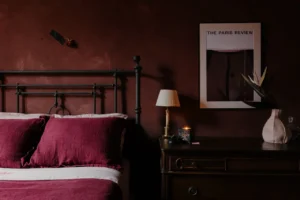
For decades, white has been considered the default color for small rooms. While it certainly reflects natural light, that doesn’t automatically make a room feel more spacious.
Many interior designers now prefer rich, warm colors because they blur visual boundaries and create depth. Instead of highlighting every corner, darker shades allow the eye to move naturally around the room, making the space feel more immersive and inviting.
Deep navy, forest green, charcoal gray, or earthy terracotta can often make a compact room feel more sophisticated than plain white walls.
What Works Better
- Choose warm, saturated colors instead of stark white.
- Paint walls, trim, and even the ceiling the same color for a seamless look.
- Use layered lighting to enhance depth and atmosphere.
SmallSpaceGuru Tip:
Don’t choose white because you’re afraid of color. Choose the color that creates the feeling you want every time you walk into the room.
Myth 2: Patterns Make Small Rooms Feel Cluttered

Many homeowners avoid wallpaper, patterned tiles, or bold fabrics because they fear overwhelming a small space.
In reality, carefully chosen patterns can guide the eye across a room instead of drawing attention to its limited size. A striking wallpaper, geometric floor tile, or textured fabric can become a focal point that gives the room personality and visual depth.
The key isn’t avoiding patterns-it’s avoiding too many competing patterns at once.
- Smart Ways to Use Patterns
Create one feature wall with wallpaper. - Use patterned cushions or rugs as accents.
- Mix patterns with solid colors for balance.
- Keep the floor relatively uncluttered.
A room with character almost always feels more memorable than a room that plays everything safe.
Myth 3: Small Rooms Need Tiny Furniture

This may be the biggest misconception of all.
Filling a room with miniature furniture often creates what designers call the “dollhouse effect.” Instead of making the room feel larger, numerous small pieces create visual clutter and make the space appear fragmented.
One well-proportioned sofa, a substantial dining table, or a custom built-in storage unit usually works better than several undersized pieces competing for attention.
Better Furniture Strategy
- Invest in fewer, higher-quality pieces.
- Choose furniture with hidden storage.
- Use built-ins whenever possible.
- Prioritize function before quantity.
- Large furniture isn’t the enemy-poor planning is.
The Real Secret to Designing Small Spaces

The best small homes don’t follow rigid decorating rules.
Instead, they reflect confidence, intentional choices, and a clear design vision. Whether you love bold colors, dramatic wallpaper, or statement furniture, the goal isn’t to make your home look bigger-it’s to make it feel better.
A thoughtfully designed 30-square-meter apartment can feel far more comfortable than a poorly planned home twice its size.
Rather than asking “How can I make this room appear larger?“, ask yourself:
“How can I make this room work better for the way I live?”
That shift in mindset is often the biggest upgrade any small space can receive.
