

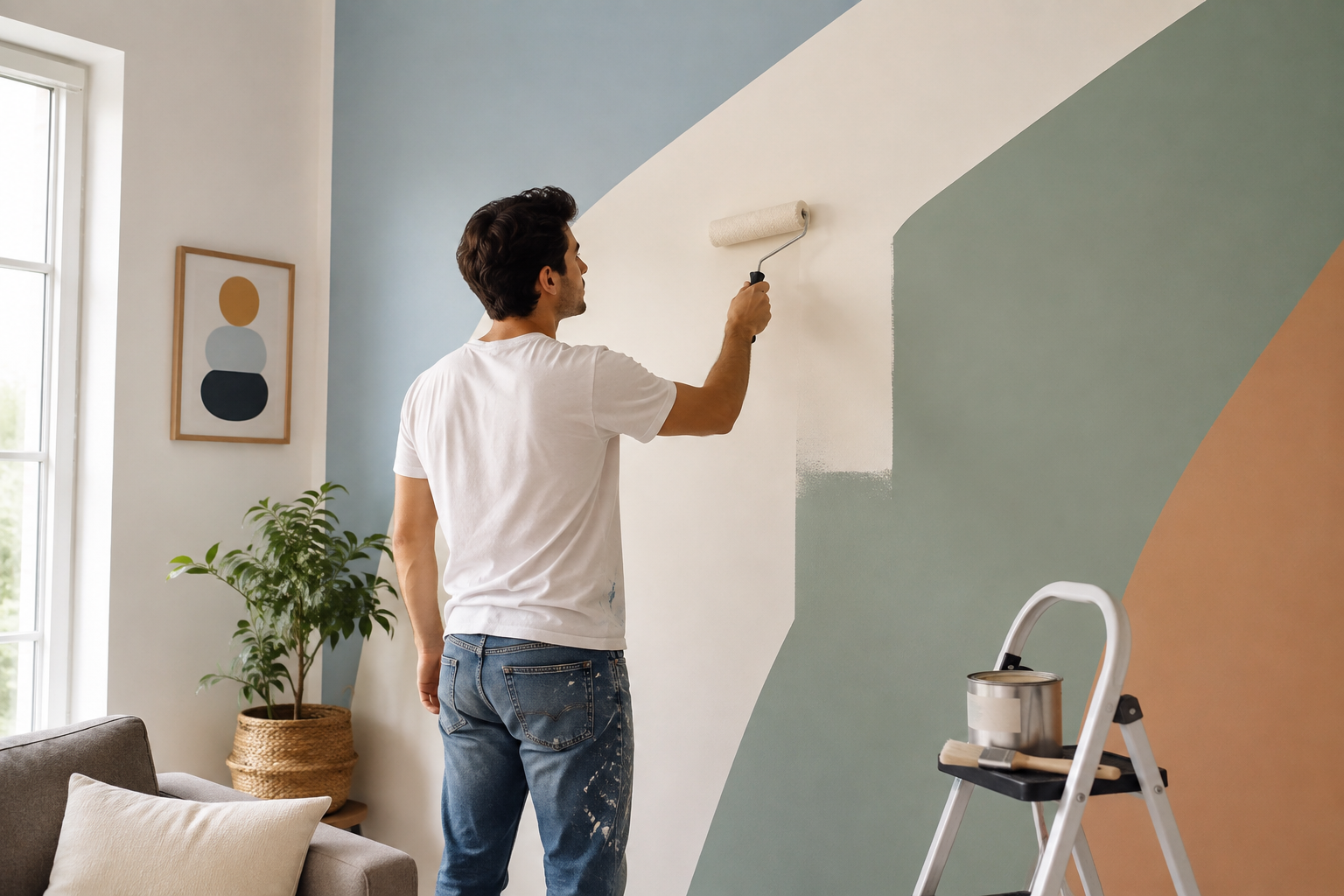
Living in a cozy apartment or managing a small room doesn’t mean you have to compromise on style or feel boxed in. While physical square footage is fixed, visual space is surprisingly flexible. By applying the right color tricks, you can easily trick the eye and turn tight quarters into bright, airy sanctuaries. Just like the principles in our guide on 10 golden rules for mastering your small space, smart design choices make all the difference. These clever color tricks will help you maximize your space without knocking down a single wall.
Here are 7 expert color tricks that interior designers use to instantly expand small rooms.
1. Embrace High-Reflectance Whites and Soft Pastels

Light colors are naturally expansive because they reflect light rather than absorb it. Light walls make boundaries recede, creating an illusion of openness.
- Opt for Warm Whites: Pure stark white can feel cold or clinical. Choose warm whites with subtle undertones (like soft cream, beige, or pale blush).
- Soft Pastels: Light sage green, powder blue, or dusty lavender bring color into your space without overwhelming the room.
💡 Pro Tip: Look for paint with a high Light Reflectance Value (LRV)—aim for an LRV above 70 to maximize light distribution.
2. Paint Trim and Baseboards the Same Color as Walls

Traditional interior design often paints baseboards and door frames crisp white while coloring the walls. However, this creates sharp horizontal lines that outline the perimeter of your room, making it look smaller.
- Monochromatic Transition: Paint your trim, baseboards, and walls the exact same shade.
- Seamless Flow: Eliminating high-contrast borders causes the boundaries to disappear, giving the impression of taller and wider walls.
3. Extend Color to the Ceiling (The “Color Drenching” Technique)

The ceiling is often referred to as the “fifth wall.” Leaving it plain white against colored walls cuts your room in half visually.
- Go All-In: Paint the ceiling the same shade as the walls—a trend known as color drenching.
- Draw the Eye Upward: If you prefer contrast, paint the ceiling a shade lighter than the walls to draw attention upward and make the ceilings feel higher.
4. Use Dark Colors Strategically for Depth
Contrary to popular belief, you don’t have to avoid dark colors in small spaces! Deep shades like navy blue, forest green, or charcoal gray can actually add rich depth when used correctly.
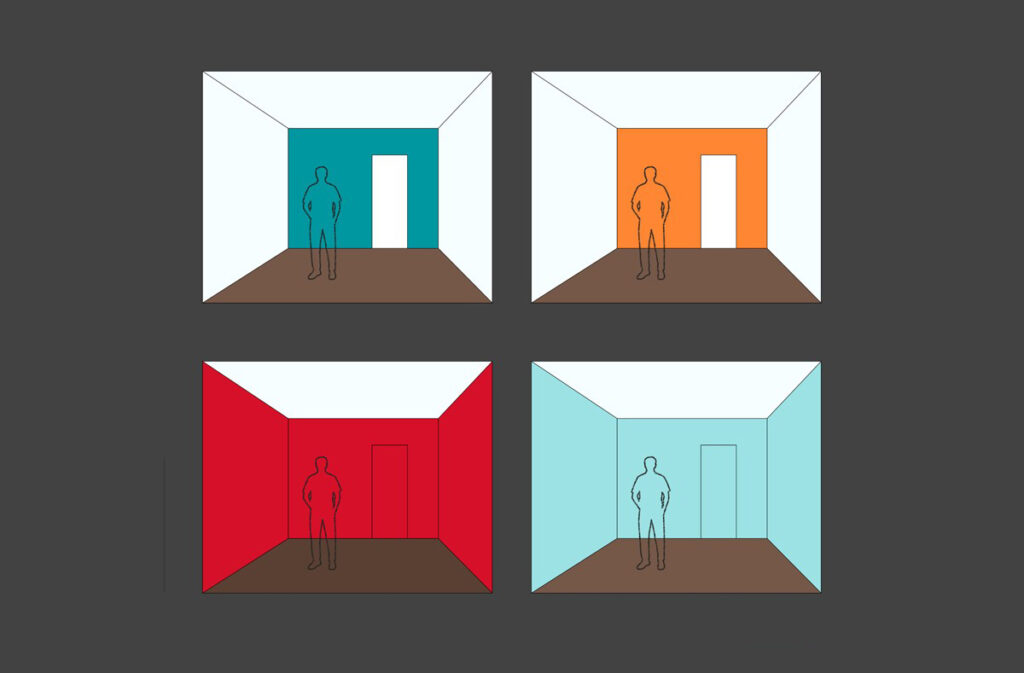
- Accent Feature: A dark accent wall recedes into the background, creating the optical illusion of added depth.
- Cozy Powder Rooms: Fully painting a tiny room (like a half-bath) in a rich, dark tone creates an intentionally cozy, jewel-box effect.
5. Match Your Furniture to Your Wall Color

High contrast between furniture and walls breaks up a room into smaller chunks.
- Tone-on-Tone Blend: Choose large furniture pieces—such as sofas, wardrobes, or bookcases—that closely match your wall color.
- Invisible Bulk: A beige sofa against a beige wall seamlessly blends into the background, making your living room feel much larger and clutter-free.
6. Create Vertical Stripes to Boost Ceiling Height
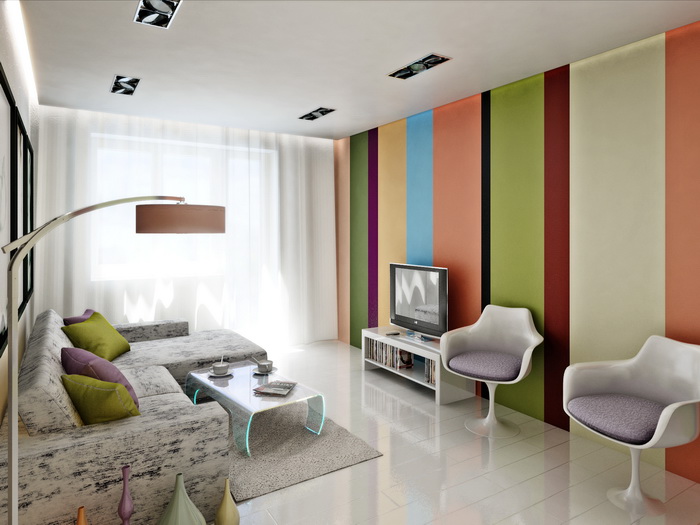
If your small space suffers from low ceilings, vertical lines are your best friend.
- Paint Lines: Use painter’s tape to create subtle, low-contrast vertical stripes on a feature wall.
- Curtains & Wallpaper: Alternatively, install floor-to-ceiling striped wallpaper or hang curtains right from the ceiling line down to the floor.
7. Stick to a Cohesive Color Palette

When a small home has different bright colors in every corner, it creates visual clutter and feels fragmented.
- Rule of Three: Stick to a primary neutral tone (60%), a secondary tone (30%), and a single accent color (10%).
- Flow Across Rooms: Keep flooring and wall undertones consistent from the entryway into the living area to create an uninterrupted flow.
🛠️ Visualize Your Space Before Painting!
Unsure how these colors will look in your actual layout? You don’t have to guess or waste money on sample pots.
📐 Test Your Designs in 3D
Use an online room planner to test wall colors, layout options, and lighting before making any final decisions!
Final Thoughts
Making a small space feel bigger doesn’t require knocking down walls. With these 7 color techniques, you can transform your home into a bright, cohesive, and spacious haven. Try starting with one room—or even just one coat of matching trim paint—and watch your space expand instantly!
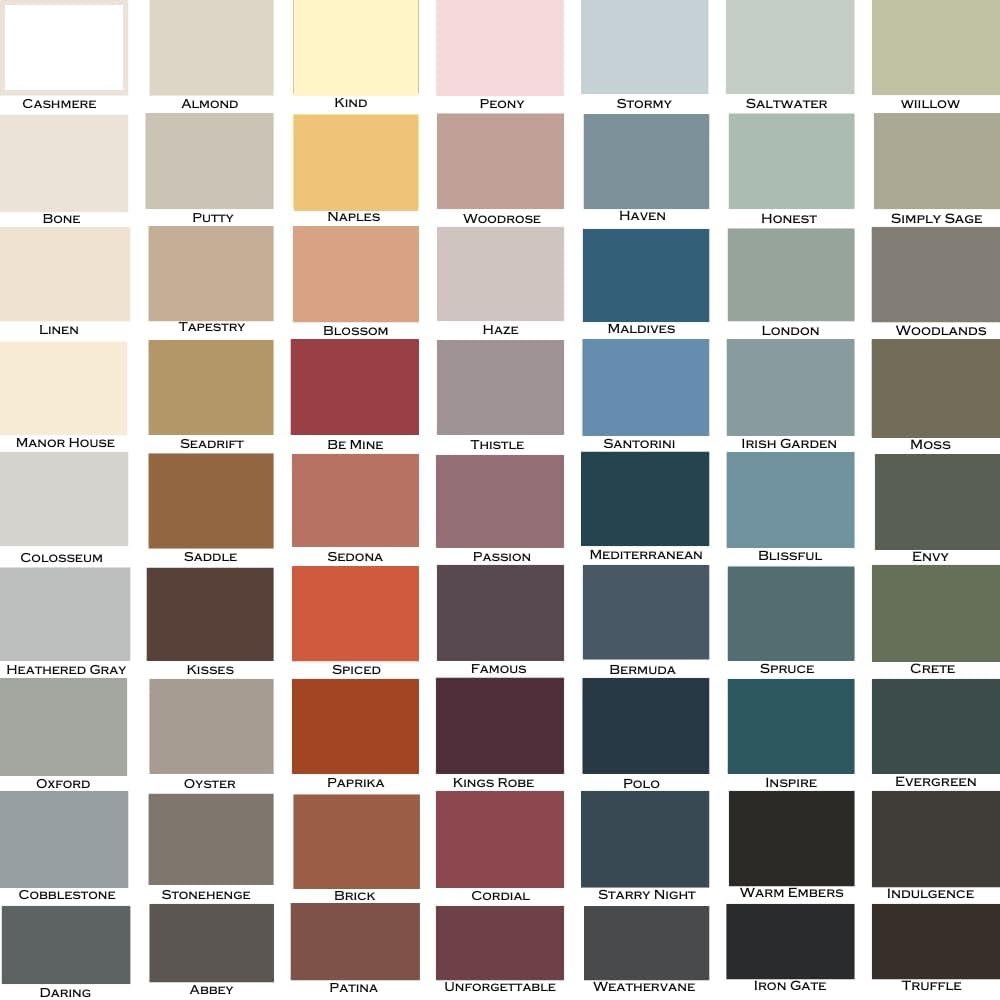
Transform your small space effortlessly with this highly-rated, smooth Sage Green paint. Perfect for creating depth and a modern aesthetic without needing a separate primer!
