

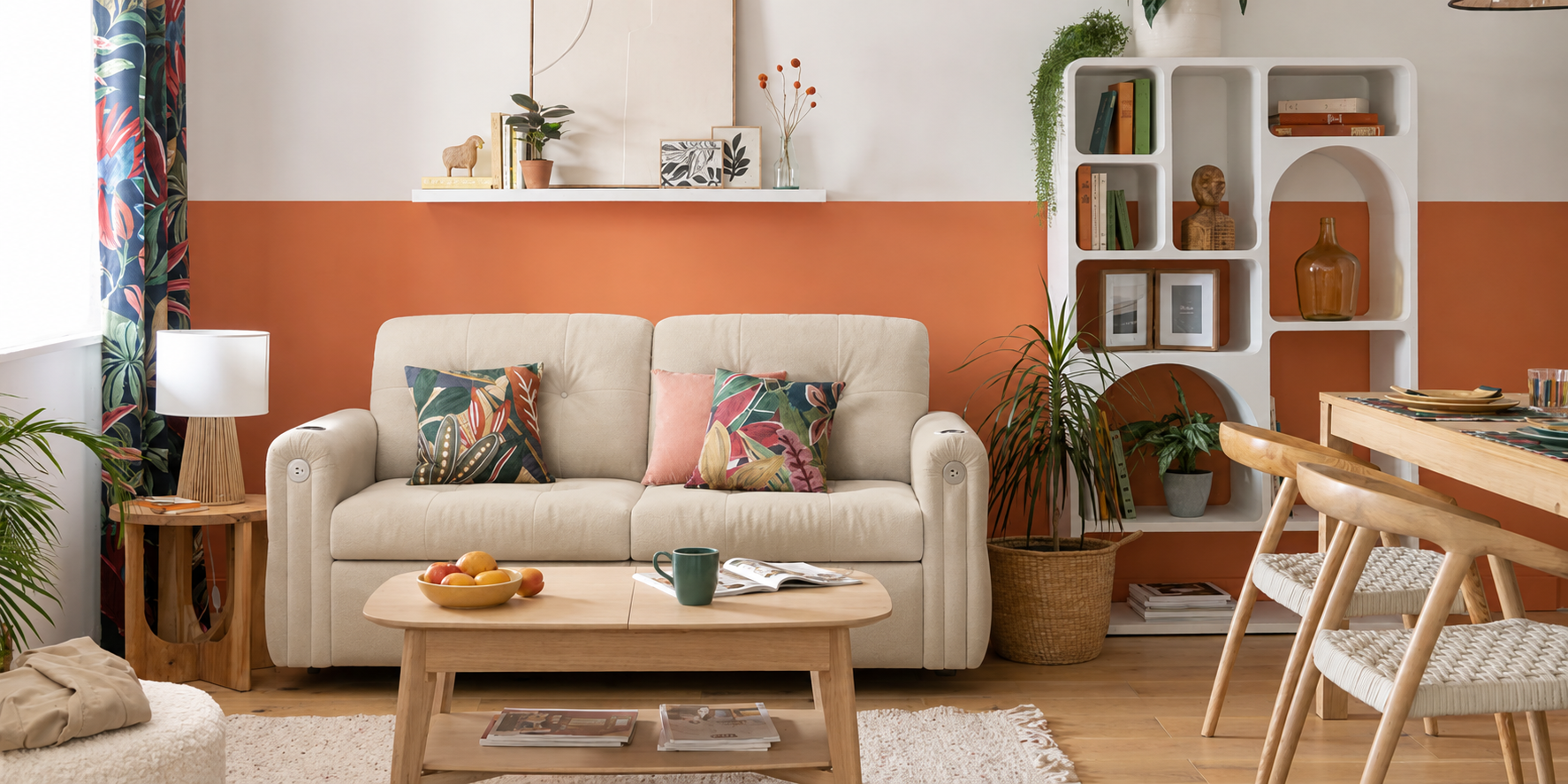
Living in a studio apartment means making a lot of life happen in a relatively small space.
Your bedroom, living room, dining area, home office, and sometimes even your entryway may all share the same few hundred square feet.
That can sound limiting — but it doesn’t have to be. In fact, once you understand the golden rules for mastering a small space, a studio can feel just as comfortable as a much larger apartment.
The trick isn’t to squeeze more furniture into the room. It’s to make smarter decisions about layout, storage, furniture, and visual space.
With a few well-planned changes, a small studio can feel organized, comfortable, and stylish without feeling overcrowded.
Here are 15 practical studio apartment ideas to help you make the most of every square foot.
1. Create Separate Zones Without Building Walls
One of the easiest ways to make a small studio feel more organized is to divide it into functional zones.
Instead of thinking of the apartment as one large room, decide where each activity belongs.
Your bed can define the sleeping area. A sofa and rug can create a living room. A small table can become a dining area, while a compact desk can establish a workspace.
You don’t necessarily need a permanent wall between these areas.
A bookshelf, curtain, folding screen, or even the back of a sofa can create a subtle separation while keeping the apartment open and bright.
The goal is not to completely close off each zone. It’s simply to give every part of the studio a clear purpose.
2. Choose Furniture That Serves More Than One Purpose
In a small studio, every piece of furniture should earn its place.
A storage ottoman can provide seating, act as a footrest, and hide blankets or other belongings.
A bench can provide seating while storing shoes underneath.
A dining table can double as a workspace.
And a sofa can potentially become a bed.
Before buying something new, ask yourself: can this piece solve two problems instead of one?
Multifunctional furniture reduces the number of objects you need in the room, which leaves more open space for walking and everyday life.
3. Turn Your Sofa Into a Bed
For some studio apartments, having both a full-size sofa and a separate bed simply isn’t practical.
A convertible sleeper sofa can give you both functions while taking up much less space than two separate pieces of furniture.
During the day, it works as your living room seating. At night, it becomes a sleeping surface.

CAPCAEK 3-in-1 Convertible Queen Sleeper Sofa, 77.2″ Pull-Out Couch Bed with USB Charging Ports
Check It on AmazonWhen choosing a sleeper sofa for a studio, don’t just measure it in its sofa configuration. Also check the dimensions when it’s fully opened.
You’ll want to make sure there is enough room to walk around the bed without blocking the kitchen, bathroom, or entryway.
Another Option
If you prefer a slightly different configuration, this pull-out sleeper sofa is another option to compare.

4. Use Your Walls for Storage
In a small studio, when floor space is limited, look up.
Your walls can provide valuable storage without taking up the floor area needed for furniture.
Floating shelves are useful above desks, sofas, beds, and kitchen counters.
They can hold books, small plants, framed photos, baskets, and everyday items while keeping the floor clear.
The key is moderation. You don’t want every wall covered with objects. A few strategically placed shelves can provide plenty of storage while maintaining a clean appearance.

5. Don’t Waste the Space Under Your Bed
The area underneath your bed is essentially hidden storage waiting to be used.
It’s a good place for things you don’t need every day, such as:
- Extra bedding
- Seasonal clothing
- Shoes
- Luggage
- Towels
- Holiday decorations
If your existing bed doesn’t provide enough clearance, consider a platform bed designed with open space underneath.

Before buying a bed frame, measure the height of your storage containers as well as the available floor area. A few inches can make the difference between storage that is genuinely useful and storage that is impossible to access.
6. Make a Small Apartment Feel Bigger With a Mirror
Mirrors can create the visual impression of a larger room by reflecting light and making the space feel deeper.
A full-length mirror works particularly well in a small studio because it combines a practical function with a strong visual effect.
Try placing one near a window so that it can reflect natural light into the room.
A leaning mirror can also work well in a rental because you may not need to make permanent changes to the wall.
You don’t need several mirrors throughout the apartment. One large, well-positioned mirror can have more impact than multiple small ones.
7. Keep the Main Color Palette Light
A small apartment doesn’t have to be completely white. But lighter colors can help reflect light and create a more open feeling.
Consider using warm white, cream, beige, soft gray, pale blue, or muted green for larger surfaces. If you want to go deeper on this, check out these color tricks for small spaces that designers use to visually expand a room.
Then add personality with smaller elements such as:
- Throw pillows
- Artwork
- Plants
- Blankets
- Curtains
- Decorative objects
This approach gives you color and personality without making the entire room visually heavy.
If you love dark colors, you don’t have to avoid them completely. Use them as accents rather than covering every large surface.
8. Define Your Living Room With a Rug
In an open small studio, a rug can help create the feeling of a separate living room without requiring a wall.
Place the rug underneath the main seating area so that the sofa, coffee table, and chairs visually belong together.
This simple trick can make the layout feel much more intentional.
For a small apartment, consider a low-pile or washable rug that’s easy to maintain.
And don’t choose a rug that’s too small. A tiny rug floating in front of the sofa can actually make the space feel more disconnected.
9. Create a Workspace That Can Disappear
Working from home can be difficult in a small studio when your desk occupies a large portion of your only room.
If you don’t need a permanent workstation, consider a folding or wall-mounted desk. You can use it during working hours and fold it away when you’re finished.
Another option is a narrow console table that can function as both a desk and a dining surface.
If you work from home every day, prioritize comfort and ergonomics. If you only need a laptop surface occasionally, you can choose a much smaller solution.
The best workspace is the one that fits your actual routine rather than taking up space simply because every apartment is expected to have a traditional desk.
10. Give Your Entryway a Purpose
Even if your small studio doesn’t have a traditional foyer, you can create a small entry zone.
This is important because shoes, jackets, bags, and mail can quickly spread throughout a small apartment.
A narrow shoe bench can provide both seating and storage without requiring a large cabinet.

VASAGLE Mariel Collection Shoe Bench, 2-Tier Shoe Storage Rack with Padded Seat
Check It on AmazonAdd a few wall hooks above the bench for coats and bags, and you’ve created a functional entryway without needing a separate room.
11. Make Awkward Corners Useful
Small apartments often contain corners that seem too small for traditional furniture. Don’t automatically leave them empty.
A narrow shelf can become a mini library. A small rolling cart can provide kitchen or bathroom storage. A corner shelf can display plants or decorative pieces.
The most important step is to measure the area carefully before buying anything. Pay particular attention to depth.
In a studio, furniture that’s only a few inches too deep can interfere with the main walking path.
12. Layer Your Lighting
Lighting can dramatically change how a small studio feels.
Instead of relying entirely on one ceiling fixture, combine several types of lighting. For example:
- Ambient lighting provides general illumination.
- Task lighting helps with activities such as reading, cooking, or working.
- Accent lighting adds warmth and atmosphere.
Different light sources also help visually separate the zones of your apartment.
A floor lamp beside the sofa can make the living area feel more intentional, while a desk lamp can identify the workspace.
If floor space is extremely limited, wall-mounted lighting can be an even better solution.
13. Mix Open and Closed Storage
Open shelves are great for displaying things you love. But not everything you own needs to be visible.
When every object is on display, a small studio can quickly feel cluttered.
Try combining:
- Open shelves
- Closed cabinets
- Storage baskets
- Drawers
- Storage ottomans
Keep attractive objects such as books, plants, and artwork visible. Hide everyday clutter inside baskets, drawers, or cabinets.
This creates a balance between personality and visual calm.
14. Draw the Eye Upward
When you don’t have much floor space, make the room feel taller instead.
Tall curtains, vertical artwork, narrow bookcases, tall plants, and floor lamps can all encourage the eye to move upward.
If possible, install curtain rods slightly above the window frame and allow the curtains to fall close to the floor.
A tall, narrow bookcase can also provide more storage than a wide, low cabinet while using a similar amount of floor space.
The goal is to make use of vertical space without filling every inch of the wall.
15. Give Everything a Home
The most effective small-space organizing trick doesn’t require buying anything.
Give every frequently used item a designated place.
Keys belong on a hook. Shoes belong in one area. Blankets can go into a storage ottoman. Mail can have a small organizer. Cleaning supplies should stay together.
This sounds simple, but it makes a huge difference in a small studio.
In a large house, a little clutter can disappear into another room. In a studio, there is nowhere for it to hide.
A simple organization system therefore becomes part of the decorating strategy.
5 Small-Space Amazon Finds Worth Considering
If you’re furnishing a studio from scratch, you don’t need to buy everything at once. Start with the products that solve your biggest problems.
CAPCAEK Convertible Queen Sleeper Sofa
KD Frames Nomad 2 Platform Bed
CAPCAEK 65″ Pull-Out Sleeper Sofa
How to Arrange a Small Studio Apartment
Before buying furniture, start with the layout.
Step 1: Measure the Apartment
Measure the room, windows, doors, kitchen area, and existing storage. Also measure the paths you’ll need to walk through every day.
Step 2: Decide Where the Bed Goes
The bed is usually the largest piece of furniture, so start with it. Try to position it where it feels visually separate from the main living area.
Step 3: Establish the Living Zone
Place the sofa and rug together to create a defined seating area.
Step 4: Add Your Workspace
Choose a location that receives enough light and doesn’t interfere with the main walking path.
Step 5: Add Storage Vertically
Use shelves and wall hooks before adding more floor-standing furniture.
Step 6: Add Decorative Details Last
Once the layout works, bring in artwork, plants, pillows, rugs, and other accessories. This prevents you from filling the room with decorative objects before you’ve solved the functional problems.
Small Studio Apartment Shopping Checklist
Before buying a new piece of furniture, ask:
- Does it fit the space? Measure before ordering.
- Does it solve a real problem? Don’t add furniture simply because you have an empty corner.
- Can it serve two purposes? Multifunctional pieces are especially valuable in studios.
- Will it block natural light? Large furniture can make a small room feel darker.
- Will I still be able to move comfortably? A beautiful layout isn’t useful if you have to squeeze between your furniture.
- Do I already own something that could do the same job? Sometimes the easiest way to create more space is simply to use what you already have differently.
Final Thoughts
A small studio apartment doesn’t need to feel like a storage unit with a bed.
The best small spaces are designed around real life.
Use furniture to create zones instead of building unnecessary walls. Choose pieces that perform multiple functions. Use your walls and the space underneath your bed for storage.
Keep large surfaces visually calm, then add personality through smaller decorative details.
And before buying anything, measure.
The right piece can make a studio feel significantly more functional. The wrong piece can make the entire apartment feel smaller.
You don’t necessarily need more square footage. You need to make the square footage you already have work harder.
